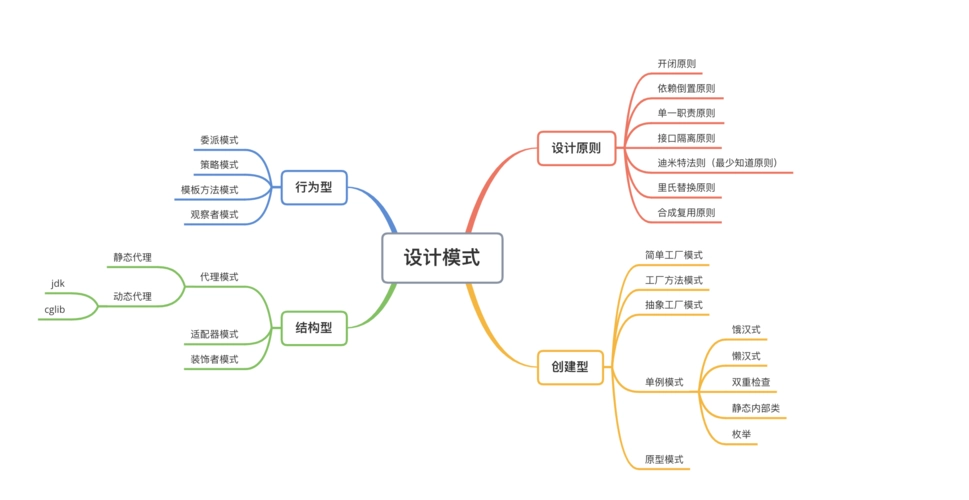
# 代理模式:隐藏在框架幕后的核心模式
# 一、模式本质与核心价值
代理模式(Proxy Pattern)是一种结构型设计模式,通过创建代理对象控制对原始对象的访问。在 Java 生态中,代理模式是实现以下能力的基石:
- 访问控制:权限校验、熔断限流
- 功能增强:日志记录、性能监控
- 延迟加载:大文件预加载、数据库连接池
- 远程调用:RPC 框架通信基础
# 二、Java 实现方式对比
# 2.1 静态代理(显式代理)
1
2
3
4
5
6
7
8
9
10
11
12
13
14
15
16
17
18
19
20
21
22
23
24
25
26
27
28
29
30
|
interface UserService {
void saveUser(String user);
}
class UserServiceImpl implements UserService {
public void saveUser(String user) {
System.out.println("保存用户:" + user);
}
}
class UserServiceProxy implements UserService {
private UserService target;
public UserServiceProxy(UserService target) {
this.target = target;
}
public void saveUser(String user) {
long start = System.currentTimeMillis();
target.saveUser(user);
System.out.println("方法耗时:" + (System.currentTimeMillis()-start));
}
}
UserService service = new UserServiceProxy(new UserServiceImpl());
service.saveUser("张三");
|
特点:
- 手动编写代理类
- 接口方法变化时代码需要同步修改
- 适合小型固定场景
# 2.2 JDK 动态代理(接口代理)
1
2
3
4
5
6
7
8
9
10
11
12
13
14
15
16
17
18
19
20
21
22
| class LogInvocationHandler implements InvocationHandler {
private final Object target;
public LogInvocationHandler(Object target) {
this.target = target;
}
public Object invoke(Object proxy, Method method, Object[] args)
throws Throwable {
System.out.println("Before method: " + method.getName());
Object result = method.invoke(target, args);
System.out.println("After method: " + method.getName());
return result;
}
}
UserService proxyInstance = (UserService) Proxy.newProxyInstance(
UserService.class.getClassLoader(),
new Class[]{UserService.class},
new LogInvocationHandler(new UserServiceImpl())
);
|
特点:
# 2.3 CGLIB 动态代理(子类代理)
1
2
3
4
5
6
7
8
9
10
11
12
13
14
15
| class CglibProxyInterceptor implements MethodInterceptor {
public Object intercept(Object obj, Method method, Object[] args,
MethodProxy proxy) throws Throwable {
System.out.println("CGLIB前置处理");
Object result = proxy.invokeSuper(obj, args);
System.out.println("CGLIB后置处理");
return result;
}
}
Enhancer enhancer = new Enhancer();
enhancer.setSuperclass(UserServiceImpl.class);
enhancer.setCallback(new CglibProxyInterceptor());
UserServiceImpl proxy = (UserServiceImpl) enhancer.create();
|
特点:
- 通过生成子类实现
- 不需要接口
- 需要添加 CGLIB 依赖
- final 类 / 方法无法代理
# 三、Spring 生态中的代理应用场景
# 3.1 Spring AOP 实现原理
Spring 框架通过代理模式实现 AOP,两种代理选择策略:
| 条件 | 使用代理类型 |
|---|
| 目标实现接口 | JDK 动态代理 |
| 目标未实现接口 | CGLIB 代理 |
| 强制使用 CGLIB | 配置 @EnableAspectJAutoProxy (proxyTargetClass=true) |
事务管理的典型实现:
1
2
3
4
5
| @Transactional
public void transferMoney() {
}
|
# 3.2 Spring Boot 自动配置
在 Spring Boot 启动过程中,Configuration 类通过代理实现:
1
2
3
4
5
6
7
8
| @Configuration
public class AppConfig {
@Bean
public DataSource dataSource() {
}
}
|
# 3.3 Feign 声明式 HTTP 客户端
OpenFeign 通过动态代理生成 HTTP 客户端:
1
2
3
4
5
6
| @FeignClient(name = "user-service")
public interface UserClient {
@GetMapping("/users/{id}")
User getUser(@PathVariable Long id);
}
|
# 3.4 MyBatis Mapper 接口实现
MyBatis 通过 JDK 动态代理将接口转换为 SQL 执行:
1
2
3
4
5
| public interface UserMapper {
@Select("SELECT * FROM users WHERE id = #{id}")
User selectUser(int id);
}
|
# 四、代理模式高级应用场景
# 4.1 分布式追踪(APM 工具)
1
2
3
4
5
6
7
8
9
10
11
|
public class TraceProxy implements InvocationHandler {
public Object invoke(Object proxy, Method method, Object[] args) {
Span span = Tracer.startSpan(method.getName());
try {
return method.invoke(target, args);
} finally {
span.finish();
}
}
}
|
# 4.2 微服务熔断器
1
2
3
4
5
6
7
8
9
10
11
12
13
14
|
class CircuitBreakerProxy implements InvocationHandler {
public Object invoke(Object proxy, Method method, Object[] args) {
if (circuit.isOpen()) {
return fallback();
}
try {
return method.invoke(target, args);
} catch (Exception e) {
circuit.recordFailure();
throw e;
}
}
}
|
# 五、性能优化建议
- 代理对象缓存:对相同目标重复使用代理实例
- 方法过滤:仅代理需要增强的方法
- 选择合适代理类型:
- 高频率调用方法避免反射
- 优先选择 CGLIB(Spring Boot 2.x 默认)
- 减少代理层级:避免多重代理嵌套
# 六、代理模式局限性
- 调试复杂性:调用栈深度增加
- 性能损耗:动态代理比直接调用慢 3-5 倍(实测数据)
- 对象身份变化:
instanceof 、 equals() 等方法需要特殊处理 - 循环依赖:在 Spring 中需要特殊处理代理对象的依赖注入
# 七、一些特殊处理:
在代理模式中,由于代理对象和真实对象是两个不同的 Java 对象实例,它们在以下两种场景中会出现特殊行为,需要特别注意处理
# 一、 instanceof 判断失效
问题本质:
代理对象(Proxy)和真实对象(Target)属于不同的类层次结构。
示例场景:
1
2
3
4
5
6
7
8
9
10
11
12
13
| public interface UserService {
void save();
}
public class UserServiceImpl implements UserService {
public void save() { }
}
UserService proxy = (UserService) Proxy.newProxyInstance(...);
boolean isInstance = proxy instanceof UserServiceImpl;
|
原因分析:
- JDK 动态代理生成的是
Proxy 子类(如 $Proxy0 ) - CGLIB 生成的是真实对象的子类(如
UserServiceImpl$$EnhancerByCGLIB$$123456 ) - 两者都与原始类存在类型差异
解决方案:
1
2
3
4
5
6
7
8
|
if(AopUtils.isAopProxy(proxy)) {
Object target = AopUtils.getTargetObject(proxy);
if(target instanceof UserServiceImpl) {
}
}
|
# 二、 equals() 方法陷阱
问题本质:
默认的 equals() 方法基于对象内存地址比较。
* 示例场景
1
2
3
4
5
| UserService real = new UserServiceImpl();
UserService proxy = createProxy(real);
boolean equals = proxy.equals(real);
|
危险后果:
- 将代理对象放入 HashSet/HashMap 时可能出现重复
- 使用对象相等判断的逻辑可能失效
解决方案:
- 重写 equals 方法(在真实对象中)
1
2
3
4
5
6
7
8
| @Override
public boolean equals(Object obj) {
if (obj instanceof UserServiceImpl) {
return this.id == ((UserServiceImpl)obj).id;
}
return false;
}
|
- 代理对象特殊处理(Spring 的 AOP 代理)
1
2
3
4
5
6
7
8
9
10
11
12
13
14
15
|
public class MyProxy extends Proxy implements Advised {
public Object getTarget() {
return targetSource.getTarget();
}
@Override
public boolean equals(Object other) {
if (other == this) return true;
if (other instanceof MyProxy) {
return this.getTarget().equals(((MyProxy)other).getTarget());
}
return this.getTarget().equals(other);
}
}
|
# 三、框架中的特殊处理(以 Spring 为例)
# 1. @Autowired 注入处理
当注入被代理对象时,Spring 会自动注入代理对象:
1
2
3
4
5
6
7
8
| @Autowired
private UserService userService;
if(AopProxyUtils.getSingletonTarget(userService) != null) {
Object target = AopProxyUtils.getSingletonTarget(userService);
}
|
# 2. 事务传播中的自调用问题
1
2
3
4
5
6
7
8
9
10
11
12
| public class UserService {
@Transactional
public void methodA() {
this.methodB();
}
@Transactional
public void methodB() { }
}
((UserService) AopContext.currentProxy()).methodB();
|
# 四、最佳实践总结
避免直接类型判断
使用 AopUtils.isAopProxy() 替代 instanceof
慎用对象级 equals()
始终基于业务属性实现相等性判断
注意集合操作
代理对象存入集合前需做归一化处理:
1
2
| Set<UserService> set = new HashSet<>();
set.add(AopUtils.getTargetObject(proxy));
|
框架特性利用
Spring 提供的工具类:
1
2
| AopProxyUtils.getSingletonTarget(proxy)
AopContext.currentProxy()
|